To pass SSIP certification in 2026, businesses must select an accredited SSIP member scheme (such as CHAS, SafeContractor, SMAS, or Constructionline), prepare comprehensive evidence against the updated SSIP Core Criteria — including health and safety policies, risk assessments, training records, accident reporting, and compliance with UK legislation — and submit for independent assessment.
- What does it mean to be SSIP certified?
- Why do businesses need an SSIP certificate?
- How much does it cost to get SSIP certified?
- How do I pass SSIP certification?
- In summary
- Need help passing your SSIP application?
Safety Schemes in Procurement (SSIP) is a widely recognised UK health and safety framework that enables standardised occupational health and safety assessments. This allows contractors to demonstrate health and safety compliance through certification from any accredited SSIP member scheme without repeated audits.
However, businesses can find the SSIP process challenging because it requires a thorough understanding of:
- The specific SSIP Core Criteria.
- Accurate documentation.
- Evidence of robust health and safety management systems.
Problems occur when mistakes or documentation gaps lead to delays or rejections. This is why handling SSIP accreditation precisely is so important and time-heavy.
In this comprehensive guide, we will provide clear, practical guidance on the essential things you need to know to navigate and successfully complete the SSIP certification process.
Need SSIP support? Contact one of our health and safety specialists today for free, same-day initial support on 01455 858 132.
Let's dive in.
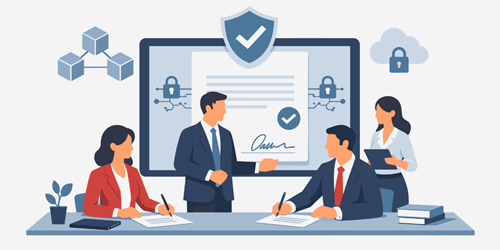
Why is SSIP important?
Picture this for a moment: You’re a small to medium sized company wanting to hire builders, electricians, and other construction-related contractors. However, you’ve heard that a competitor was recently involved in an HSE-led prosecution. You heard that they hired a contractor who had a serious on-site accident, which occurred because of very poor health and safety controls. Both the competitor and the contractor were fined hefty sums as a result.
As a result, you are now very wary of hiring contractors who you can’t verify as health and safety compliant, safe contractors.
Before SSIP, as a company, you would need to ensure that every contractor you hire / intend to work with fills out several long and arduous health and safety forms before commencing a working relationship to avoid running legal and financial risks.
However, this can be an incredibly inefficient, time consuming, and expensive process that could very easily be undertaken improperly if not managed by an expert.
SSIP, however, fixes this problem. SSIP is an umbrella organisation that allows contractors that firms hire to pass one propriety safety check that serves as an effective vetting of health and safety compliance.
Ultimately, SSIP provides two main benefits to companies and contractors:
- If you are a hiring company: You can guarantee the safety and compliance standards of the contractors, you hire.
- If you are a contractor: You can signal to hiring businesses that your company is current, compliant, and up to date from a health and safety perspective.
What does it mean to be SSIP certified?
In simple terms, being SSIP certified means your company has had its health and safety setup properly and thoroughly checked by an approved, independent health and safety expert.
It means, as a business, you have had the following thoroughly tested and vetted:
- Your safety policies, procedures, and rules.
- How you train workers.
- Risk assessments for jobs / work (e.g. working at height, using tools, cement mixing, etc).
- Insurance, accident record, and how you prevent injury.
- Proof you are currently and will in the future, follow the latest UK health and safety laws and legislation.
An SSIP certification proves your operations do not run legally identified health and safety risks.

Why do businesses need an SSIP certificate?
There are several reasons construction sector businesses should become SSIP-certified:
1. Bigger clients (and public sector / Government related jobs) will require / demand SSIP-certification
Unless you’re a business that provides services to very informal sectors, you are more than likely going to find that most of the clientele you work with will require SSIP certification before working with you.
In fact, when it comes to bigger clients, such as those in the public / Government sector, bidding or tendering will occur for your service. Many of these organisations won’t actually let your business participate in the bidding / tendering process unless your business has an SSIP certificate, along with other required standards and certifications. In fact, for many, tendering rules and requirements are often written into the rules and requirements of the process.
2. SSIP makes your clients’ life easier
When a big company hires you as a subcontractor, they have a legal duty to ensure that you, as an extension of their business, is fully compliant with the latest health and safety rules and regulations. Without an SSIP certification, widely recognised as ‘standard’, you are more likely to be perceived as risky and or even unsafe to work with.
3. Having SSIP keeps you competitive and lucrative
Having an SSIP certification will increase your chances of acquiring tenders / more work, especially for bigger and better-paying jobs.
- You avoid being seen as non-current or high-risk.
- You save time and money.
4. SSIP accreditation positions your company well in an increasingly strict health and safety landscape
In 2026, construction companies are under more pressure to prove safety amidst increasing prosecutions by the HSE and more yearly inspections. SSIP certification is the easy, recognised way to demonstrate health and safety compliance.
How much does it cost to get SSIP certified?
SSIP certification is not free. It’s usually a yearly fee (typically renewed every 12 months), and prices vary depending on:
- The SSIP member scheme you choose (CHAS, Safe Contractor, SMAS, Constructionline, CQMS, etc).
- How many employees you have (if you’re a bigger company, then you’re likely to pay a higher fee due to increased risks and business complexity).
- If you’re a smaller business, costs will likely be lower.
- Whether you undertake SSIP certification yourself or pay a consultant such as Croner to help you process the SSIP application.
Typical costs as of 2026, inclusive of VAT
- Cheapest: Sole traders or very small teams are likely to pay between £99 - £250 + VAT per annum.
- Mid-range: Smaller teams of around 2 – 15 people can expect to pay between £400 - £1,000 + VAT per annum.
- Higher end: Bigger firms of 30+ workers / employees can expect to pay between £1,000 - £3,000 + VAT per annum.
- For the first year, costs might be slightly higher due to administration and joiner fees, depending on which scheme you choose.
- Renewals typically cost the same or a similar amount each year.
- Many firms and contractors have claimed that SSIP certification costs pay for themselves off, because it usually assists in winning business.

How do I pass SSIP certification?
Outlined below are the general steps businesses must take to pass / receive SSIP certification / accreditation.
- Choose an approved SSIP member: Firstly, you’ll need to choose a member from the member scheme list. The member will check your health & safety documentation and procedures against the standard SSIP Core Criteria, and if you pass, you receive an SSIP certificate.
- Contact the member organisation: Once you’ve chosen an approved member to undertake the SSIP accreditation process, you’ll need to visit their website and ultimately reach out to them either via direct call or email. They will then send you details of next steps (i.e. documentation you must supply, payment details, process details).
- Prepare your documentation and evidence: Typically, the member will request a specific set of information / documentation. This is known as the SSIP Core Criteria. The member organisation will need to verify that your documentation meets the standards as set out in this guidance before an approval / a certificate is awarded. Criteria broadly include:
- Health & Safety policy and organisation documentation.
- Overall health and safety arrangements.
- Competency, training, and information.
- Risk assessments and safe work systems.
- Welfare provisions.
- Accident reporting and investigation.
- Consultation and communication.
- Access to competent advice.
For the full, detailed list of requirements, we encourage you to know and understand the SSIP Core Criteria.
- Submit you application and undergo assessment:
You’ll be able to apply once ready through the channels provided by the member when you first contacted them. After submission, an assessor will review your documentation and evidence and will ultimately give an approval or request further information. Remember, only apply once you are sure you have all supplied all the correct information, otherwise you may have to resubmit information which can hold up the process.
- Maintain your SSIP certification: Remember, SSIP needs to be renewed yearly. So, ensure your systems, procedures, policies, and training are up to date.
In summary
To round everything up:
SSIP is essentially a regulated organisation that makes the health and safety checking and vetting process for companies looking to hire contractors far, far easier.
Need help passing your SSIP application?
With extensive experience in guiding businesses through the complexities of Safety Schemes in Procurement (SSIP) accreditation, Croner offers a proven, hands-on service to manage the entire process on your behalf.
Our experts handle documentation preparation, evidence gathering, compliance checks, and submissions to SSIP member schemes, drawing on years of successful applications and achieving an almost zero failure rate.
By outsourcing your SSIP accreditation to Croner, you can save valuable time, avoid common pitfalls, and focus on running your business whilst ensuring swift, reliable certification.
For free, same-day initial SSIP accreditation assistance, reach out to one of our health and safety experts on 01455 858 132.
If you like this content, you may also like


About the Author

Freddie is our Health and Safety Team Manager. Having worked in the industry for over six years, Freddie advises our clients in all things health and safety, and helps to ensure that they are compliant with the latest legislation.
Related resources
Categories
- Business Advice
- Culture & Performance
- Disciplinary & Grievances
- Dismissals & Conduct
- Employee Conduct
- Employment Contracts and Documentation
- Employment Law
- Employment Rights Bill
- End of Contract
- Equality & Discrimination
- Health & Safety
- Hiring and Managing
- Leave & Absence
- Managing Health & Safety
- Moving
- Occupational Health
- Pay & Benefits
- Recruitment
- Risk & Welfare