Discrimination in the workplace occurs when you treat an employee less favourably because of Protected Characteristics. At Croner, we’re knowledgeable and experienced when it comes to identifying and preventing discrimination within the workplace. If you need immediate support on an HR issue within your business, give us a call today on 0808 501 6651 for FREE, expert advice.
- Protected characteristics and discrimination
- Is a gender pay gap classed as discrimination?
- What is salary benchmarking?
- Gender discrimination examples
- How to stop gender discrimination
- Expert HR and employment law support
Protected characteristics and discrimination
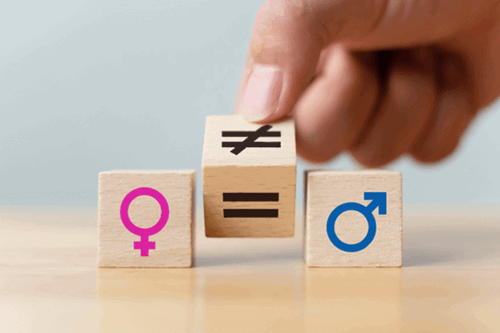
Under to the Equality Act 2010, you cannot treat your staff different or less favourably because of attributes and characteristics that make them who they are.
Protected characteristics under this legislation include:
- Age
- Sex
- Race
- Religion
- Disability
- Sexual orientation
- Gender reassignment
- Pregnancy or maternity
- Marriage or civil partnership status
What is sex discrimination?
Sex discrimination is behaving in a discriminatory manner towards an employee because of their gender or sex. It can be either:
- Direct discrimination: Involving the unfair treatment of an employee because of their sex
- Indirect discrimination: Involving treating a person the same as others but with the treatment having a negative effect because of a protected characteristic they have
Gender discrimination at work may also be in the form of:
- Harassment: Involves unwanted behaviour based on an employee’s gender.
- Victimisation: It involves treating an employee less favourably because they’ve complained about discrimination or supported a co-worker who did.
Is a gender pay gap classed as discrimination?
Yes, a gender pay gap is a form of discrimination, which also can be referred to as gender wage discrimination. It’s against the law to pay male employees more than female employees and vice versa for performing the same tasks and having the same responsibilities. While a gender pay gap is still prevalent within the UK across UK wide businesses, employers should make active efforts to pay their male and female staff equal amounts for doing the same role.
It’s worth noting that sex discrimination is not the same as , which is also protected under the Equality Act. Discrimination against a person’s sex means treated a female employee less favourably than their male counterparts, or vice versa.

Do I need to report my gender pay gap information?
If you employ 250 or more employees, you are then required to report on your gender pay gap information. This report will show a snapshot of data from your company's pay gap, that covers six main areas:
- The difference in mean pay of full-pay employees.
- Differences in the median pay of full-pay employees.
- Contrasts in mean bonuses pay of employees.
- The contrasts in median bonus pay for employees.
- The proportion of employees who received bonus pay.
- The number of full-pay employees in each of the four quartile pay bands.
Our experts at Croner can offer you HR and employment law support and guidance, as well as getting you to grips with your gender pay gap reporting. Call our team today on 0808 501 6651.
What is salary benchmarking?
Salary benchmarking is the process that collects data on the pay and benefits within your business. This compares pay packages that are on offer for the same role by your competitors.

What is positive gender discrimination?
Gender discrimination involves favouring someone of one sex over another because of a protected characteristic. For example, you can’t insist on only hiring female applicants for a nursing position, or only male applicants for a labourer position. This applies even if your justification for doing so seems plausible; it is still illegal.
Positive discrimination is still discrimination. A good example of this is hiring or promoting a female applicant over a more qualified male applicant to promote your diversity and inclusivity within the workplace. Another example is if a female is employed in a traditionally male-dominated industry, such as the construction sector. If the female employee is relieved of certain responsibilities and given ‘easier’ tasks because of the stereotype that women are not as effective at physical work than men, this is discrimination. Therefore, treating an employee differently because of their sex, even though it may be considered positive, is still discrimination.

Gender discrimination examples
There are many examples of gender-based discrimination in action, from recruitment to policies, work processes and even dismissals.
Direct discrimination, for example, involves dismissing a staff member or changing their duties after gender reassignment.
An example of indirect discrimination against women includes changing their shift patterns so they finish work at 5pm, rather 3pm. Women are more likely to be the primary caregiver to children, so they will then be at a disadvantage due to the new shift pattern.
Other common examples of gender-based discrimination in social institutions include:
- Prioritising male job applicants for a position that involves physical activities.
- Not considering female applicants for a role because you think they won’t fit in to a male-dominated field.
- Favouring women over men for care positions because they’re thought of as being more nurturing.
Are there any impacts of gender discrimination?
Gender discrimination can cause low morale for employees, as it can affect their personal and professional lives. Some of the impacts can include:
Poor mental health
If an employee is a victim of sex discrimination, this can cause them to experience depression, stress and anxiety. This in turn can lead to increased sickness absence.
Less wage and benefits
When male or female employees are paid differently for the same job, it's referred to as the gender pay gap. As per the Equality Act 2010, employers must pay everyone equal pay for equal work.
This can have a significant impact on employees. If one employee is paid significantly less, this can lead to financial troubles which can cause increased negative knock on effects in individuals lives
Injury and death
While it may not seem like it, gender discrimination can lead to injury and death. This could be from all types of violence in and out of the workplace. In extreme circumstances, it can also lead to suicide or manslaughter. If you spot any signs of violence, you must report the case to the police (with the employee's permission).
How to stop gender discrimination
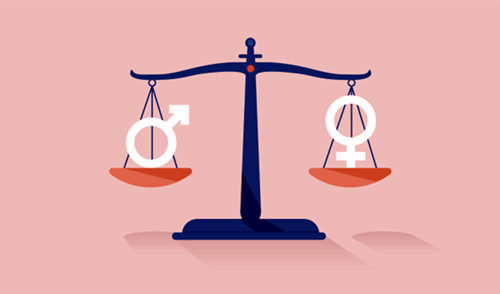
As part of your duty of care to your employees, you’ll also need to protect them against all forms of discrimination and harassment (sexual harassment included).
To do this, you must:
- Educate employees on discrimination.
- Develop a disciplinary process.
- Deal with issues of discrimination.
- Train and develop managers and supervisors on how to identify and respond to discrimination in the workplace.
- Review and update your policies on equality and discrimination at work.
- Respond promptly, appropriately and confidentially to all complaints of inappropriate behaviour.
Gender discrimination policy
It’s important to have a policy in place that addresses forms of equality and discrimination in the workplace, including in attitudes regarding gender roles.
This is to avoid claims of discrimination and employment tribunal proceedings. In it, you’ll highlight the:
- Aim of the policy
- Your stance on discrimination at work
- Process for reporting it
- Disciplinary procedure when it occurs
- Wording on how to stop gender discrimination
You should ensure this policy addresses discrimination at every stage including when:
- Determining pay
- Deciding training and development opportunities
- Selecting employees for promotion
- Disciplining and dismissing employees
- Selecting employees for redundancy
Expert HR and employment law support
At Croner, we’re experts at providing support when to comes to HR and employment law advice, including how to avoid gender discrimination. If you have any questions about discrimination, call our professional team on 0808 501 6651 for FREE, 24/7 advice.
If you like this content, you may also like



About the Author

Andrew Willis is the senior manager of the Litigation and Employment Department and assumes additional responsibility for managing Croner’s office based telephone HR advisory teams, who specialise in employment law, HR and commercial legal advice for small & large organisations across the United Kingdom.

@AndrewWillisCGL

Related resources
Categories
- Business Advice
- Culture & Performance
- Disciplinary & Grievances
- Dismissals & Conduct
- Employee Conduct
- Employment Contracts and Documentation
- Employment Law
- Employment Rights Bill
- End of Contract
- Equality & Discrimination
- Health & Safety
- Hiring and Managing
- Leave & Absence
- Managing Health & Safety
- Moving
- Occupational Health
- Pay & Benefits
- Recruitment
- Risk & Welfare